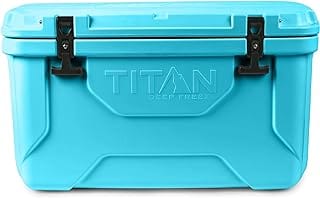
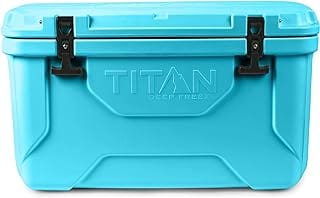
Titan Hard Ice Chest Cooler Roto Cooler with Microba
$159.99
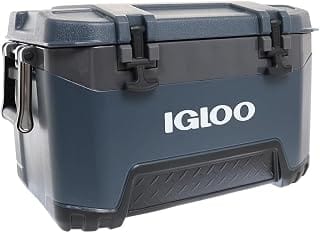
Igloo BMX Cooler | Insulated Hard Shell Ice Chest
$149.99
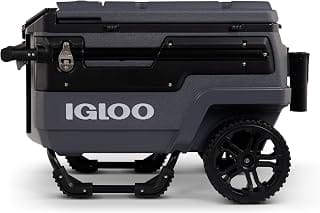
Igloo Trailmate Journey 70Qt Wheeled Cooler | Insula
$249.98
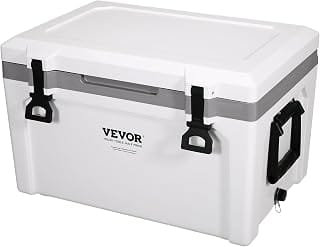
VEVOR Portable Cooler,Hard Cooler with Ice Retention
$113.5
Affiliate disclosure: as an affiliate partner, RigTested may earn from qualifying purchases through links on this page, at no extra cost to you.
We may earn a commission if you buy through links on our site, at no extra cost to you.
The "Ice Melt" Problem: Why Most Coolers Fail
If you have ever opened your cooler after a long day of driving or hiking only to find slush instead of solid ice, you know the frustration. For our overland rig, this is not just an inconvenience; it is a logistics failure. Standard coolers often lose their cooling power within 24 hours due to poor insulation density or compromised lid seals.
To understand why, we look at basic heat transfer. Heat moves from warm areas (the outside air) to cold areas (your ice) through conduction and convection. In a poorly built cooler, the thin walls act as a bridge for that heat, while gaps in the lid allow warm air to circulate around your ice. Real-world "holding ice" means keeping drinks cold and meat safe during multi-day trips where you cannot access a freezer. It is not about lab conditions; it is about performance under direct sun and rough terrain.
What Makes a Cooler Actually Hold Ice?
We break down ice retention into three critical components: insulation thickness, lid seal quality, and shell durability. Thicker walls mean more material blocking heat transfer. A tight gasket prevents warm air from entering the cavity, which is often where cheap coolers fail.
- Insulation: High-density foam traps cold air effectively.
- Lid Seal: A continuous rubber gasket ensures no gaps for heat to enter.
- Air Gaps: Minimizing empty space inside the cooler helps maintain a consistent cold environment.
We also emphasize preparation. Pre-chilling your contents and using large blocks of ice rather than small cubes significantly extends cooling time. Block ice melts slower because it has less surface area exposed to warm air.
Top Rotomolded Coolers for Maximum Ice Retention
For heavy-duty use, rotomolded coolers are the benchmark. They feature thick foam walls and robust gasket seals that create a near-vacuum environment inside the shell. While they are heavier and more expensive than standard hard-shell options, their longevity and performance justify the cost for serious campers.
Our top value pick is the Titan Hard Ice Chest Cooler Roto Cooler with Microban Protection and Deep Freeze Insulation. At $159.99, it offers a strong balance of rotomolded durability without breaking the bank like premium competitors. Titan markets the deep freeze insulation for holding temperature in high-heat conditions.
- Titan Hard Ice Chest Cooler Roto Cooler with Microban Protection and Deep Freeze Insulation: Best overall value for rotomolded construction.
Best Budget-Friendly Camping Coolers That Still Perform
You do not always need a $300 cooler. Mid-range options offer double-wall construction and enhanced gaskets that provide decent ice retention without the premium price tag. These are ideal for weekend trips where you have access to resupply or shorter haul times.
The Igloo BMX Cooler | Insulated Hard Shell Ice Chest is a solid entry point at $149.99. It provides hard-shell protection and reliable insulation for standard camping needs. For those needing mobility, the Igloo Trailmate Journey 70Qt Wheeled Cooler | Insulated Hard Shell Ice Chest at $249.98 adds wheels for easier transport over rough campsite terrain.
- Igloo BMX Cooler | Insulated Hard Shell Ice Chest: Reliable hard-shell option for standard trips.
- Igloo Trailmate Journey 70Qt Wheeled Cooler | Insulated Hard Shell Ice Chest: Best for portability with wheels.
Rotomolded vs. Hard-Sided vs. Soft-Sided: A Quick Comparison
Choosing the right type depends on your trip duration and terrain. Rotomolded coolers are overkill for short day trips but essential for multi-day camping where ice retention is critical. Hard-sided coolers offer a middle ground, providing good protection without the extreme weight of rotomolded units. Soft-sided coolers are lightest but offer the least insulation and durability against drops or UV exposure.
| Type | Ice Retention | Weight/Portability | Durability |
|---|---|---|---|
| Rotomolded | High (Days) | Heavy | Excellent |
| Hard-Sided | Moderate (24-48 hrs) | Moderate | Good |
| Soft-Sided | Low (Hours) | Light | Fair |
How to Choose the Right Size for Your Camping Trip
Capacity is often measured in cubic inches, but remember that insulation thickness reduces usable space. For a family of four on a weekend trip, we recommend 50-70 quarts to allow room for ice and food. Solo hikers can get by with smaller units, while extended overland expeditions may require larger rotomolded models.
The VEVOR Portable Cooler,Hard Cooler with Ice Retention, Heavy-Duty Handles and Strap, Lightweight Rigid Material Insulated Portable Cooler at $113.5 is a compact option suitable for shorter trips or smaller groups where weight is a primary concern.
- VEVOR Portable Cooler,Hard Cooler with Ice Retention, Heavy-Duty Handles and Strap, Lightweight Rigid Material Insulated Portable Cooler: Best for lightweight, short-duration needs.
Pro Tips: Maximizing Ice Life in Any Cooler
- Pre-chill: Put ice and cold drinks in the cooler before you leave home to lower the internal temperature.
- Pack tightly: Minimize air gaps by using frozen water bottles as both cooling sources and drink containers.
- Avoid sun: Keep the cooler out of direct sunlight or cover it with a shade tarp.
- Check seals: Regularly inspect gaskets for cracks or dirt that can compromise the seal.
FAQ: Common Questions About Ice Retention
How long should a good cooler hold ice?
A standard hard-sided cooler might hold ice for 24-48 hours, while high-end rotomolded coolers can last several days depending on external temperatures and usage frequency.
Is rotomolded worth the extra cost?
If you go off-grid for multiple days without access to ice resupply, yes. The longevity of rotomolded units often means they outlast cheaper alternatives by many years.
Can I use dry ice in any cooler?
Dry ice produces carbon dioxide gas and requires ventilation. Ensure your cooler has a way to vent this gas, or you risk pressure buildup. It is generally safer in hard-sided units with proper vents than in fully sealed soft coolers.
Final Verdict: Which Cooler Fits Your Needs?
For heavy-duty overlanding and multi-day trips where ice retention is non-negotiable, the Titan Hard Ice Chest Cooler Roto Cooler with Microban Protection and Deep Freeze Insulation offers the best performance-to-price ratio. If you need mobility for shorter trips, the Igloo Trailmate Journey 70Qt Wheeled Cooler | Insulated Hard Shell Ice Chest is a practical choice. For budget-conscious campers, the Igloo BMX Cooler | Insulated Hard Shell Ice Chest provides reliable basic protection.
No cooler is perfect; your usage habits, such as how often you open the lid and where you place it, matter just as much as the gear itself. Always verify current specs and reviews before purchasing, as manufacturing details can change over time.
🔥 Live deals, updated daily
Prices on the gear we cover move constantly. We track current discounts on coolers that actually hold ice and the rest of the gear we cover and refresh them every morning.
See today’s live deals →This guide was produced with AI assistance and reviewed by our team.
Get the gear that holds up
New guides, hands-on reviews as they land, and real deals, about once a week. No spam, unsubscribe anytime.