Affiliate disclosure: as an affiliate partner, RigTested may earn from qualifying purchases through links on this page, at no extra cost to you.
Affiliate Disclosure: If you buy through links on our site, we may earn a commission at no extra cost to you. This helps support the site.
Why Quality Trekking Poles Matter
When you step out of the cab for multi-day treks, your legs take a beating just like any other part of the rig. Proper trekking poles are not just accessories; they are structural supports that reduce impact on your knees and hips by up to 25% during descents. On uneven terrain, they provide a third point of contact with the ground, significantly improving balance when footing is loose or slippery.
It is important to distinguish between casual walking poles, which are often rigid and designed for flat paths, and technical gear built for steep ascents and descents. Technical poles allow you to shorten them on climbs to drive power through your arms and lengthen them on downslopes to absorb shock. Relying solely on core strength for stability is a recipe for fatigue; using a pair of poles distributes the load across your upper body, allowing you to maintain pace over longer distances without burning out.
Key Features to Evaluate Before Buying
Material Options
- Aluminum: The standard for durability. It is tougher than carbon fiber, resists impact better, and costs less. It is heavier but ideal for rugged use where you might drop or bend the pole.
- Carbon Fiber: Extremely lightweight and stiff. It reduces arm fatigue on long climbs but can shatter under lateral stress (like catching a branch) if not handled with care. It commands a higher price point.
Locking Mechanisms
- Twist Locks: Simple, no moving parts to break. However, they can be difficult to adjust when wearing gloves in cold weather and may loosen over time due to vibration.
- Lever/Flip Locks: Quick and secure. They offer a solid clamping force that rarely slips during heavy use. The downside is more moving parts that can jam if debris gets inside the collar.
Grip Materials
- Cork: Our preferred choice for wet or sweaty conditions. It molds to your hand over time, stays grippy when damp, and resists odor better than foam.
- Foam/EVA: Lighter and cheaper. Great for dry conditions but can become slippery if hands get very sweaty and may compress permanently after long-term use.
Top Picks by Use Case
Trekology Trek-Z Cork Grip Collapsible Lightweight H
$33.65
Trekology Trek-Z Cork Grip Collapsible Lightweight H
$37.4
Collapsible Trekking Poles for Hiking - Lightweight
$19.99
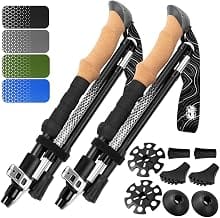
Premium Foldable Hiking Poles by USA Brand - Adjusta
$36.97
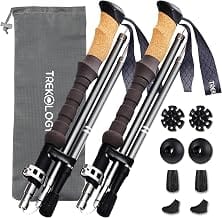
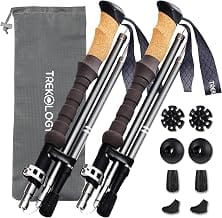
Best Overall: Trekology Trek-Z Cork Grip Collapsible Lightweight Hiking Trekking Poles
This pair stands out for balanced weight, durability, and price point. The cork grip is designed to hold traction even when hands are slick from sweat or rain. The aluminum construction is robust enough to handle the abuse of rocky trails without fear of shattering. At $33.65, it offers premium features at a mid-range price, making it the most versatile option for mixed use.
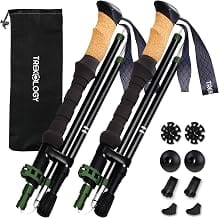
Lightweight/Speed Hiking: Trekology Trek-Z Cork Grip Collapsible Lightweight Hiking Trekking Poles
While the listing title is similar, this specific SKU often represents a variant optimized for minimal pack weight. For speed hiking where every ounce counts on your back, the refined aluminum alloy in this configuration reduces swing weight significantly. The cork grip remains consistent with our top pick, ensuring comfort during high-cadence strides. Priced at $37.4, it is a slight step up for those prioritizing lightweight performance.
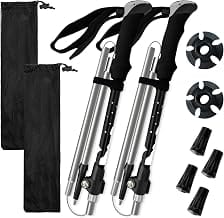
Budget-Friendly: Collapsible Trekking Poles for Hiking - Lightweight Foldable Hiking Poles
This 2-pack is a reliable aluminum build for occasional hikers who need functional gear without breaking the bank. The quick-lock system is straightforward, and the overall construction holds up well under light to moderate loads. At $19.99, it is an excellent entry point for testing whether you actually use poles before investing in higher-end materials.
| Model | Material | Grip Type | Lock System | Price |
|---|---|---|---|---|
| Trekology Trek-Z (Overall) | Aluminum | Cork | Collapsible/Quick-Lock | $33.65 |
| Trekology Trek-Z (Lightweight) | Aluminum | Cork | Collapsible/Quick-Lock | $37.4 |
| Budget Collapsible Poles | Aluminum | EVA/Foam | Quick-Lock System | $19.99 |
| USA Brand Premium Foldable Poles | Aircraft Aluminum | Cork/EVA | Metal Locks | $36.97 |
How to Choose the Right Length & Adjustability
To find your ideal pole length, stand upright with your arms relaxed at your sides. Your elbow should form a 90-degree angle when holding the pole handle. If you are shorter in the torso but have longer legs, or vice versa, this method ensures the pole supports your natural biomechanics rather than forcing an awkward posture.
Multi-section adjustability is crucial for varying trail conditions. On steep uphill sections, shorten the poles to drive power through your arms without overextending your shoulders. On descents, lengthen them to absorb shock and keep your center of gravity stable. However, there is a trade-off: each additional adjustment point creates a potential weak spot in the shaft where debris can collect or stress fractures can initiate. For most users, three-section poles offer the best balance between range of motion and structural integrity.
Trekking Poles vs. Hiking Sticks: What’s the Difference?
Hiking poles often refer to rigid, single-length sticks that are not collapsible. Trekking poles are adjustable and collapsible, designed for versatility in changing terrain. Fixed-length wooden or metal sticks can be durable and simple, but they lack the adaptability of modern telescopic systems.
A simple stick might suffice if you hike on flat, predictable trails where length adjustment is rarely needed. However, technical walking poles are necessary when navigating steep grades, river crossings, or uneven off-road terrain where quick adjustments and shock absorption are critical for safety and comfort.
Maintenance & Care Tips
Clean grip materials regularly to prevent slippage and odor buildup. Cork grips can be wiped down with a damp cloth after use; avoid soaking them in water as this can degrade the material over time. For foam or EVA grips, mild soap and water work well.
Store collapsible poles either fully extended or fully collapsed, but never partially locked for long periods. This prevents stress on the locking mechanisms and ensures they remain smooth to operate. Inspect your gear regularly for signs of wear: bent shafts, loose locks that do not click firmly, or worn-out tips. Tungsten carbide tips can be replaced if they become dull; rubber caps should be swapped out once they show significant cracking.
Frequently Asked Questions (FAQ)
Can I use trekking poles in winter?
Yes, but you need to attach snow baskets. These are wide rings that prevent the pole from sinking deep into soft snow. For cold weather, consider grips with a wider diameter for better glove compatibility.
How do I pack collapsible poles on a plane?
Generally, trekking poles are accepted as checked baggage or sometimes carry-on if they fit within the airline's size limits (usually under 22 inches when collapsed). Always check with your specific carrier before flying, as regulations vary. Most collapsible poles in our top picks fold down to a length suitable for overhead bins.
Are carbon fiber poles worth the extra cost?
If you are doing speed hiking or ultralight backpacking where every ounce matters, yes. The weight savings reduce arm fatigue significantly over long distances. However, if you hike on rocky terrain where you might catch a pole on a rock or branch, aluminum is often the safer choice due to its impact resistance and lower repair cost.
Final Thoughts & Next Steps
The "best" pole depends entirely on your individual hiking style, frequency of use, and budget. For mixed use, where you need durability for rough trails but also portability for travel—the Trekology Trek-Z Cork Grip Collapsible Lightweight Hiking Trekking Poles remains our go-to recommendation. Prioritize fit and comfort over brand name when selecting your trekking poles. If the grip feels right in your hand and the length adjusts smoothly, you will likely be satisfied with the performance.
🔥 Live deals, updated daily
Prices on the gear we cover move constantly. We track current discounts on trekking poles for the trail and the rest of the gear we cover and refresh them every morning.
See today’s live deals →This guide was produced with AI assistance and reviewed by our team.
Get the gear that holds up
New guides, hands-on reviews as they land, and real deals, about once a week. No spam, unsubscribe anytime.