Affiliate disclosure: as an affiliate partner, RigTested may earn from qualifying purchases through links on this page, at no extra cost to you.
We are an independent publication and may receive a small commission on purchases made through our links.
The case for overhead vs. rear storage
When you pack a truck or SUV for a multi-day trip, interior space is always at a premium. Roof racks are great for bulky items like foam mats or large duffels, but they raise your center of gravity and increase wind drag significantly. Trunk packing often means digging through personal effects to find a headlamp or a specific tool. A hitch cargo carrier solves this by moving non-essential gear outside the vehicle entirely. The smaller, sharper items still need a home in the bed, and a dedicated truck tool box is what keeps those out of the cargo pile.
- Weather Protection: Keeping rain-soaked boots, muddy tires, and wet clothes in a rear basket prevents them from soaking your seat covers or floor mats.
- Loading Efficiency: You load gear directly into the carrier without lifting it over roof bars or cramming it under seat belts. This keeps hands free for managing doors and keys.
- Interior Clarity: By offloading bulky items like coolers, spare jacks, or bike bags to the rear, you keep the cab clean for navigating and resting.
This setup is ideal for overlanders, cyclists, skiers, and families who need extra utility without the bulk of a full-size trailer.
Key features that separate quality haulers
Weight capacity & distribution
Most standard hitch carriers rate 500 lbs, but you must calculate your actual payload. Check your vehicle’s Gross Vehicle Weight Rating (GVWR) and subtract the curb weight of your truck plus passengers. The difference is your available payload. A full cargo carrier adds static weight to the rear axle. For stability, distribute weight evenly across the basket. Heavy items should be placed toward the vehicle end to keep the center of gravity low and close to the hitch point.
Material durability
These carriers live in dusty, wet, and salty environments. Two main materials dominate this category:
- Powder-Coated Steel: Offers high strength-to-weight ratio and lower cost. The powder coat protects against rust, but if it chips, the underlying steel is vulnerable. It requires occasional inspection.
- Aluminum: Heavier than steel for the same size basket but immune to rust. It maintains its finish better over years of outdoor exposure and generally requires less maintenance.
Security mechanisms
Gear theft is a real risk at campgrounds. Look for carriers with lockable gates or bungee systems that can be secured with padlocks. Anti-theft hitch pins are essential; standard plastic collars can be popped off in seconds. A locking pin prevents the entire carrier from being lifted off the receiver.
Top picks by use case
MaxxHaul 70107 53" x 19-1/2" Hitch Cargo Carrier - T
$61.99
MaxxHaul 70108 Aluminum Cargo Carrier With High Side
$109.99
Hitch Basket, 500LBS Heavy Duty Rust-Proof for SUV,
$199.99
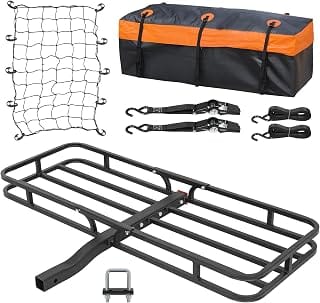
WEIZE 53" x 19" Hitch Mount Cargo Carrier Basket 500
$89.99
We compared several units on rated capacity, materials, and weather protection.
The All-Rounder: MaxxHaul 70108 Aluminum Cargo Carrier
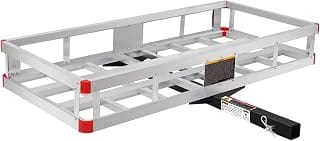
MaxxHaul 70108 Aluminum Cargo Carrier With High Side Rails- Trailer Hitch Mount For RV's, Trucks, SUV's, Vans, Cars With 2" Hitch Receiver - 500-lb Load Capacity, Grey, 49" x 22.5" is our top choice for general use. At $109.99, it balances price with the durability of aluminum. The high side rails prevent items from sliding off during sharp turns or on uneven terrain. It fits a standard 2-inch receiver and handles 500 lbs without flexing.
The Heavy-Duty Hauler: Hitch Basket, 500LBS Heavy Duty Rust-Proof
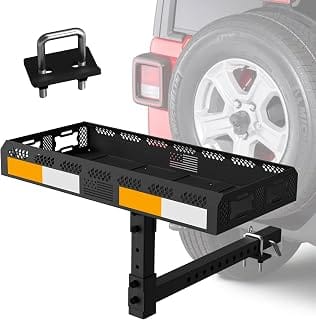
Hitch Basket, 500LBS Heavy Duty Rust-Proof for SUV, Truck, Van | E-Coated Anti Rust, Reflective Strip, for 2" Receiver is built for serious loads. Priced at $199.99, it features an e-coat finish that provides superior rust protection compared to standard powder coat. The reflective strip adds a safety element when backing up in low light. While more expensive, the construction feels thicker, and the anti-rust treatment makes it ideal for coastal or high-humidity environments where we frequently travel.
The Compact/Travel Friendly: WEIZE 53" x 19" Hitch Mount Cargo Carrier Basket
WEIZE 53" x 19" Hitch Mount Cargo Carrier Basket 500LB Capacity with Hitch Stabilizer, Waterproof Bag, Net & Straps, Fits 2" Receiver for Car SUV, Steel Construction is a solid mid-range option at $89.99. It includes a hitch stabilizer to reduce rattle and comes with a waterproof bag and straps, which are practical additions. The steel construction is sturdy, and the width (19 inches) makes it slightly narrower than some competitors, which can help with clearance issues on vehicles with wide rear bumpers.
Budget Option: MaxxHaul 70107 Steel Carrier
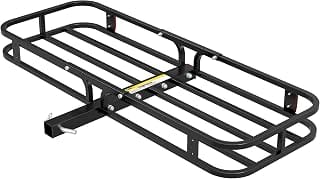
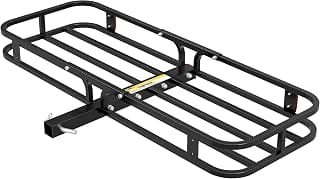
MaxxHaul 70107 53" x 19-1/2" Hitch Cargo Carrier - Trailer Mount Steel With High Side Rails For RV's, Trucks, SUV's, Vans, Cars 2" Receiver 500-lb Load Capacity , Black is the most affordable option at $61.99. It shares dimensions and capacity with other MaxxHaul models but uses steel. If you are on a tight budget or need a spare carrier for a secondary vehicle, this unit performs adequately. Just be mindful of maintaining the powder coat to prevent long-term rust issues.
Spec comparison
| Product | Material | Dimensions (L x W) | Capacity | Price |
|---|---|---|---|---|
| MaxxHaul 70108 Aluminum Cargo Carrier | Aluminum | 49" x 22.5" | 500 lbs | $109.99 |
| Hitch Basket, 500LBS Heavy Duty Rust-Proof | E-Coated Steel | N/A (Heavy Duty) | 500 lbs | $199.99 |
| WEIZE 53" x 19" Hitch Mount Cargo Carrier Basket | Steel | 53" x 19" | 500 lbs | $89.99 |
| MaxxHaul 70107 53" x 19-1/2" Hitch Cargo Carrier | Steel | 53" x 19.5" | 500 lbs | $61.99 |
How to choose the right hitch rack for your vehicle
Hitch class compatibility
All products listed here are designed for a 2-inch receiver, which is standard for Class III and Class IV hitches. If you have a smaller 1.25-inch (Class I or II) receiver, these carriers will not fit without an adapter. We recommend checking your owner’s manual to confirm your hitch class before purchasing.
Clearance & visibility
Before buying, measure the distance from your rear bumper to the ground and check for obstructions like tow hooks or exhaust tips. The carrier should not obstruct your license plate or taillights. If it does, you may need a riser bar (not included in these products) to lift the basket higher.
Mounting hardware
Ensure you have the correct hitch pins and collars. Many carriers include basic plastic collars, but we recommend upgrading to locking steel pins immediately. Torque specifications for any bolts used in custom mounting should follow your vehicle manufacturer’s guidelines.
Installation & safety best practices
- Align the receiver: Ensure the carrier is fully seated into the hitch tube before inserting the pin.
- Secure pins/collars: Use locking pins to prevent theft and rattle. Tighten any hardware according to specifications.
- Test stability: Push on the carrier from different angles to check for play before loading gear.
- Loading strategy: Place heaviest items closest to the vehicle hitch. This keeps the center of gravity low and reduces sway. Avoid overloading the rear axle, which can affect braking and steering.
Maintain your unit by regularly inspecting welds, hinge points (if folding), and rust spots on steel cargo hauler units. Clean off road salt immediately after winter trips.
For gear that rides above the bed instead, our overland bed rack guide covers deck height and load ratings.
Common mistakes & how to avoid them
- Overestimating weight capacity: Do not ignore your vehicle’s GVWR. Adding 500 lbs of gear plus the carrier’s own weight can push a loaded truck over its limit, causing safety issues.
- Ignoring local laws: Check regulations regarding overhang length and license plate visibility when using a long hitch rack. Some states require plates to remain visible at all times.
- Failing to use anti-rattle devices: Without proper locking mechanisms or stabilizers, you will experience noise during driving. This can be distracting and may indicate loose hardware.
FAQ: Hitch cargo carrier questions
Can I use a hitch cargo carrier while towing?
Generally, no. Most manufacturers do not recommend using a hitch cargo carrier when towing a trailer. The combined weight and movement can stress the hitch and create unsafe conditions. Check your specific carrier’s manual for explicit warnings.
What is the difference between a 2-inch and 1.25-inch receiver compatibility?
A 2-inch receiver is larger and stronger, typically found on trucks and SUVs with Class III or IV hitches. A 1.25-inch receiver is smaller and usually for sedans or light-duty vehicles (Class I/II). The carriers listed here are only compatible with 2-inch receivers.
How do I clean a powder-coated steel carrier to prevent rust?
Wash the carrier regularly with mild soap and water. Dry it thoroughly after washing, especially in crevices where water can trap. Inspect for chipped paint and touch up with matching spray paint if necessary.
Are there height restrictions for cargo on rear-mounted carriers?
There are no strict universal height limits for cargo itself, but the total width of your vehicle (including mirrors) must not exceed 102 inches in many regions. Ensure your gear does not extend beyond this legal width.
Final verdict & next steps
For most users, the MaxxHaul 70108 Aluminum Cargo Carrier offers the best balance of durability and value due to its rust-resistant aluminum construction. If you are in a harsh environment or need maximum corrosion resistance, the Hitch Basket, 500LBS Heavy Duty Rust-Proof is worth the premium price.
Before purchasing, verify your specific vehicle’s hitch class and receiver size.
🔥 Live deals, updated daily
Prices on the gear we cover move constantly. We track current discounts on hitch cargo carriers for gear hauling and the rest of the gear we cover and refresh them every morning.
See today’s live deals →This guide was produced with AI assistance and reviewed by our team.
Related guides
- Truck bed and camping guide: the full cluster in one place
- Truck bed tents
- Rooftop tents
- Truck mattresses
Get the gear that holds up
New guides, hands-on reviews as they land, and real deals, about once a week. No spam, unsubscribe anytime.