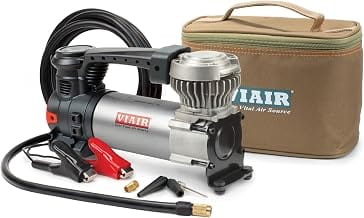
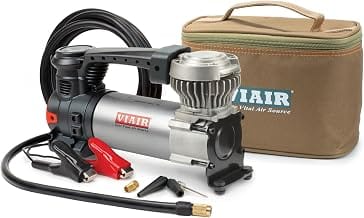
VIAIR 88P - 00088 Portable Compressor Kit with Allig
$89.89
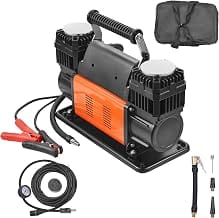
VEVOR 10.6 CFM Heavy Duty Air Compressor, 30s Fast I
$99.01
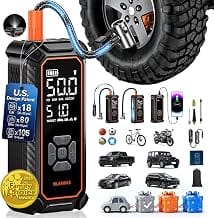
OlarHike Tire Inflator Portable Air Compressor,Dual
$27.98
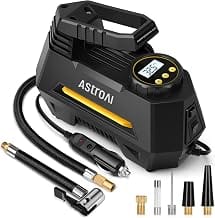
AstroAI AIRUN H Tire Inflator Portable Air Compresso
$27.19
Affiliate disclosure: as an affiliate partner, RigTested may earn from qualifying purchases through links on this page, at no extra cost to you.
Affiliate Disclosure: When you buy through links on our site, we may earn an affiliate commission at no extra cost to you.
Why dedicated off-road air systems matter
Standard 12V car compressors often struggle with the low-pressure requirements of serious overlanding setups. When running large tires like 35-inch or 40-inch all-terrains, the volume of air needed to reach even a modest operating pressure is significantly higher than for standard sedan tires. A weak compressor can take an unreasonable amount of time to fill these tires, draining your battery and wasting valuable trail time.
Maintaining consistent pressure management is critical for preventing sidewall damage on rough terrain. Dropping pressure too low without immediate correction can lead to bead unseating or rim damage, while inconsistent inflation across all four corners affects handling and tire wear. This is where the distinction between a general-purpose portable air compressor and a specialized overlanding tire inflator becomes clear. General units are designed for quick top-offs on highway tires, whereas overland-specific systems prioritize sustained airflow (CFM) and durability under harsh conditions to handle high-volume tires efficiently.
Key features to look for in an overland tire inflator
Pressure Range & Accuracy: Precision is non-negotiable when dropping off-road tires to low pressures, such as 15-20 PSI for rock crawling or sand. You need a unit that can shut off automatically at the exact PSI you set without overshooting. Overshooting by even 3-5 PSI in a low-pressure scenario can drastically change your tire's contact patch and articulation capabilities. The compressor gets the air back in, but to get it out in a controlled way before a rock or sand run you want dedicated tire deflators, and they are not the same tool at all.
Airflow Capacity (CFM): Cubic Feet per Minute is the most important metric for overlanders. High CFM ratings are essential for filling large volume tires quickly. A standard sedan tire might only need a small amount of air to go from 30 to 35 PSI, but a 40-inch tire requires substantial airflow to move from 10 to 35 PSI. Without adequate CFM, you will be waiting minutes per wheel, which is impractical when you are in the middle of a trail.
Power Source Compatibility: Most overland rigs rely on 12V DC power tapped directly into the vehicle's electrical system or battery. However, dual-battery systems offer more headroom for high-draw compressors. For campsite use where the engine is off and you want to preserve main battery health, standalone 120V/AC units or cordless options with internal batteries can be useful backups.
Top portable air compressor options for the rig
We compared several units on rated airflow, duty cycle, and build. Here are the standouts based on build quality, airflow, and usability.
- VIAIR 88P - 00088 Portable Compressor Kit: This is a solid choice for daily drivers that occasionally venture off-road. It offers a compact design with alligator clamps, making it easy to store in the truck bed. While not the highest CFM unit on this list, its reliability and simplicity make it a dependable backup for topping off tires after a long highway stretch or light trail day.
- VEVOR 10.6 CFM Heavy Duty Air Compressor: This is where things get serious. The VEVOR unit features dual-cylinder construction that delivers high airflow rates suitable for large SUVs and trucks. VEVOR advertises 30-second fast inflation, and its 10.6 CFM rating is far above a standard 12V pump. It is built for heavy-duty use and can handle the demands of 4x4 vehicles without breaking a sweat.
- OlarHike Tire Inflator Portable Air Compressor: This unit stands out for its versatility with dual power sources (cordless battery and 12V DC). It features digital gauges and automatic shut-off, which is crucial for precision pressure maintenance. The cordless capability allows you to inflate tires when the engine is off without draining your main batteries, a handy feature for campsite adjustments.
- AstroAI AIRUN H Tire Inflator: A budget-friendly option that punches above its weight class. It includes an auto shut-off with a digital pressure gauge and an LED light for nighttime use. While it is more suited for cars, motorcycles, and bikes due to lower CFM compared to the VEVOR, it is an excellent lightweight unit for quick fixes or inflating smaller tires where high airflow is less critical.
How to choose the right inflator for your setup
Tire Size & Volume: Match the compressor's CFM output to your tire dimensions. If you are running 35-inch tires, a unit with at least 10-12 CFM is recommended for reasonable inflation times. For 40-inch or larger tires, look for units exceeding 15 CFM if possible. Smaller tires can be serviced by lower CFM units, but the time difference becomes noticeable as tire volume increases.
Power Budget: Before selecting a high-draw unit, check your vehicle's alternator capacity and battery health. High-CFM compressors draw significant amps (often 30-50A or more). If you have a single-battery system with an older alternator, running a heavy-duty compressor for extended periods could drain the battery if the engine is not running at sufficient RPMs. Dual-battery setups mitigate this risk by providing additional power reserve.
Portability vs. Power: There is always a trade-off between weight and performance. Lightweight handheld units are easy to store and use but often sacrifice CFM for size. More powerful, bulkier stationary compressors offer faster inflation times but require more storage space and wiring effort. For most overlanders, the VEVOR 10.6 CFM represents a good balance of power and manageable size.
Installation & integration tips for overlanders
Mount your compressor in a location that keeps hoses accessible but protected from mud, rocks, and debris. The passenger-side wheel well or the back of the cab are common spots, provided you have weatherproofing. Use dedicated fuses and wiring harnesses to protect your vehicle’s electrical system. Never tap into existing fuse slots without proper gauge wire and a dedicated circuit breaker. This prevents overheating wires and potential fire hazards.
Consider having a secondary power source for inflating tires when the engine is off. A portable power station or a small 12V battery pack can run lower-draw compressors like the OlarHike or AstroAI without impacting your main vehicle batteries. This is particularly useful at camp when you want to adjust tire pressures before bed without worrying about draining your starter battery.
Long fill sessions lean on the battery, so a unit from our jump starter guide is worth carrying alongside the compressor.
Common mistakes to avoid when inflating off-road tires
Avoid inflating cold tires to hot operating pressures. Tires gain pressure as they heat up during driving, often by 5-10 PSI. If you inflate a cold tire to 35 PSI and then drive for an hour, it may reach 45 PSI, leading to over-inflation, reduced traction, and potential blowouts. Always check pressures when the tires are at their operating temperature or account for this increase.
Do not rely on standard gas station hoses if they cannot reach your required high PSI levels or if the hose is too short to access your valve stems easily. Some overland setups require higher pressures for highway speeds, and some truck wheel wells make it difficult to fit a standard nozzle. Use adapters that provide a secure seal to prevent air leaks during inflation.
Always check valve stems for leaks before starting inflation. A leaking stem can waste significant air and time, especially when trying to reach low pressures where the compressor is working harder to move less air volume. A quick hiss test with soapy water or by ear can save you frustration on the trail. Then check what the sound actually is. A steady hiss at a valve stem is a stem job, but a thin hissing that moves around the tread as you spin the wheel is a puncture, and no amount of inflation fixes that. Our tire repair kit guide covers the plugs and sealants that do, because an inflator only makes the leak easier to find.
Frequently asked questions
Can I use a portable air compressor for all tire sizes?
Most portable compressors work across a range of tire sizes, but limitations exist. Very large tires (40-inch+) require high CFM units to fill in a reasonable time. Very small tires (bikes, motorcycles) may be overkill for heavy-duty truck compressors, though they will still function. The key is matching the compressor's airflow to the tire volume.
How long does it take to inflate an off-road tire from 10 PSI to 35 PSI?
This depends heavily on CFM rating and tire size. A high-CFM unit like the VEVOR 10.6 CFM can fill a 35-inch tire from 10 to 35 PSI in approximately 2-4 minutes. Lower CFM units may take 8-15 minutes or more for the same task. Always factor in breaks between tires if your compressor has a duty cycle limit.
Do I need a separate compressor for each wheel?
No, most systems handle one wheel at a time efficiently. You inflate one tire to the desired pressure, disconnect, move to the next wheel, and repeat. Having multiple compressors is unnecessary unless you are running a vehicle with an extreme number of tires or specific logistical constraints.
Final thoughts & next steps
Matching your inflator's capability to your specific overlanding needs is essential for safety and convenience. Whether you choose the compact VIAIR 88P - 00088 Portable Compressor Kit for light duty or the powerful VEVOR 10.6 CFM Heavy Duty Air Compressor for serious off-roading, ensure it can handle your tire volume and pressure requirements.
Before any major trip, test your chosen tire inflator to ensure reliability. Check connections, verify accuracy against a known good gauge, and practice the inflation process so you are not fumbling in the dark or mud when you need it most.
| Product | Price | Key Feature | Best For |
|---|---|---|---|
| VIAIR 88P - 00088 Portable Compressor Kit | $89.89 | Compact, Alligator Clamps | Daily drivers / Light off-road |
| VEVOR 10.6 CFM Heavy Duty Air Compressor | $99.01 | Dual-Cylinder, High CFM | Trucks / Large SUVs / Serious Overlanding |
| OlarHike Tire Inflator Portable Air Compressor | $27.98 | Dual Power (Cordless/12V), Digital Gauge | Campsite use / Precision adjustments |
| AstroAI AIRUN H Tire Inflator | $27.19 | Budget, Auto Shut-off, LED Light | Cars / Motorcycles / Backup unit |
🔥 Live deals, updated daily
Prices on the gear we cover move constantly. We track current discounts on portable tire inflators for overlanding and the rest of the gear we cover and refresh them every morning.
See today’s live deals →This guide was produced with AI assistance and reviewed by our team.
Related guides
- Off-road recovery guide: the full cluster in one place
- Jump starters
- Tire deflators
- Recovery boards
Get the gear that holds up
New guides, hands-on reviews as they land, and real deals, about once a week. No spam, unsubscribe anytime.