Getting stuck rarely has one cause, so recovery rarely has one tool. Low traction, a flat tire, a buried wheel, or a dead battery each call for different gear, and the pieces work best when you know which job each one does. This hub links every RigTested recovery guide in roughly the order you would use them on the trail.
Step one: air down
Lower tire pressure puts more rubber on the ground. The tire deflator guide explains that most compressors are a dead end for letting air out, which is why dedicated deflators exist. Picks range from a single Spurtar valve covering 6 to 30 PSI to four-valve sets that do all corners at once. The recovery board guide backs this up: combining boards with tire deflation to around 15 to 20 PSI significantly increases your chances of a successful self-recovery.
Step two: traction
Recovery boards handle soft sand, mud, and snow at moderate depth. The board guide is clear about their limit: if you are bogged to the axles, boards are not enough and you need a secondary method like a winch. Center the board under the tire's contact patch and clean packed mud out of the ribs after each use.
Step three: pulling
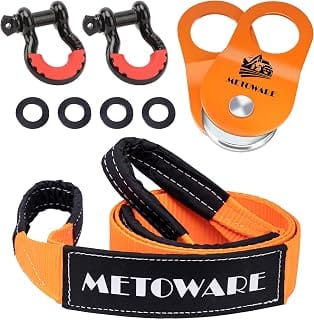
When traction alone fails, the recovery kit guide covers the gear that pulls. Tow straps stretch slightly to absorb shock loads instead of snapping, snatch blocks change the angle of pull or double winch capacity, and shackles connect everything to rated anchor points. The guide also explains reading WLL versus SWL ratings so the weakest link in the chain is still strong enough.
Step four: lifting
A recovery kit does not lift anything. The off-road jack guide puts it simply: a jack lifts and a strap pulls, so keep those jobs separate. Its most important rule is that a jack is a lifting tool, not a support tool. Put jack stands under the frame before anyone goes near the load, and use a saddle pad on a high-lift jack.
Step five: fix the tire and air back up
A puncture is often what put the truck down in the first place. The tire repair kit guide covers the three ways to patch a hole on the trail: liquid sealant, a plug kit with tools, or an aerosol spray. Then the tire inflator guide explains why large tires in the 35 to 40 inch range need a compressor with sustained airflow rather than a highway top-off unit.
Step six: the battery
A dead starter battery far from help means total immobilization. The jump starter guide covers IP ratings for dust and water, drop durability, and matching cranking amps to your engine.
Every guide in this cluster
- Best Tire Deflators for Airing Down: the fastest traction gain before you dig.
- Best Recovery Boards: plastic versus aluminum boards for sand, mud, and snow.
- Best Off-Road Recovery Kits: straps, shackles, and snatch blocks with the right ratings.
- Best Off-Road Jacks: trolley, high-lift, and bottle jacks for trail lifts.
- Best Emergency Tire Repair Kits: plugs and sealants for punctures miles from a shop.
- Best Portable Tire Inflators: compressors sized for big off-road tires.
- Best Portable Jump Starters: rugged starters for a dead battery on the trail.
Need somewhere dry to keep all of this? See our truck bed and camping hub for tool boxes and bed storage.
Get the gear that holds up
New field tests, guides and real deals, about once a week. No spam, unsubscribe anytime.