Affiliate disclosure: as an affiliate partner, RigTested may earn from qualifying purchases through links on this page, at no extra cost to you. As an Amazon Associate, we earn from qualifying purchases.
Why you need a repair stash out back
Everyone on the trail has some version of this. Some of them are a $9 kit in the glovebox they have never opened. Some of them are a dedicated bin of plugs you have actually used twice. Both are right. A puncture out at twelve miles with a spare that is missing, shredded, or welded to the hub is the moment a repair kit stops being clutter.
There are really three ways to patch a roadworthy hole, and each kit below is built around one of them. Liquid sealant, a proper plug with tools, or the spritz-and-roll aerosol. The difference is not which one is better overall. It is which one matches the tire you are driving and the gear you are willing to carry. The four below are the ones we would actually buy.
Quick picks
| Pick | Type | Best for | Price |
|---|---|---|---|
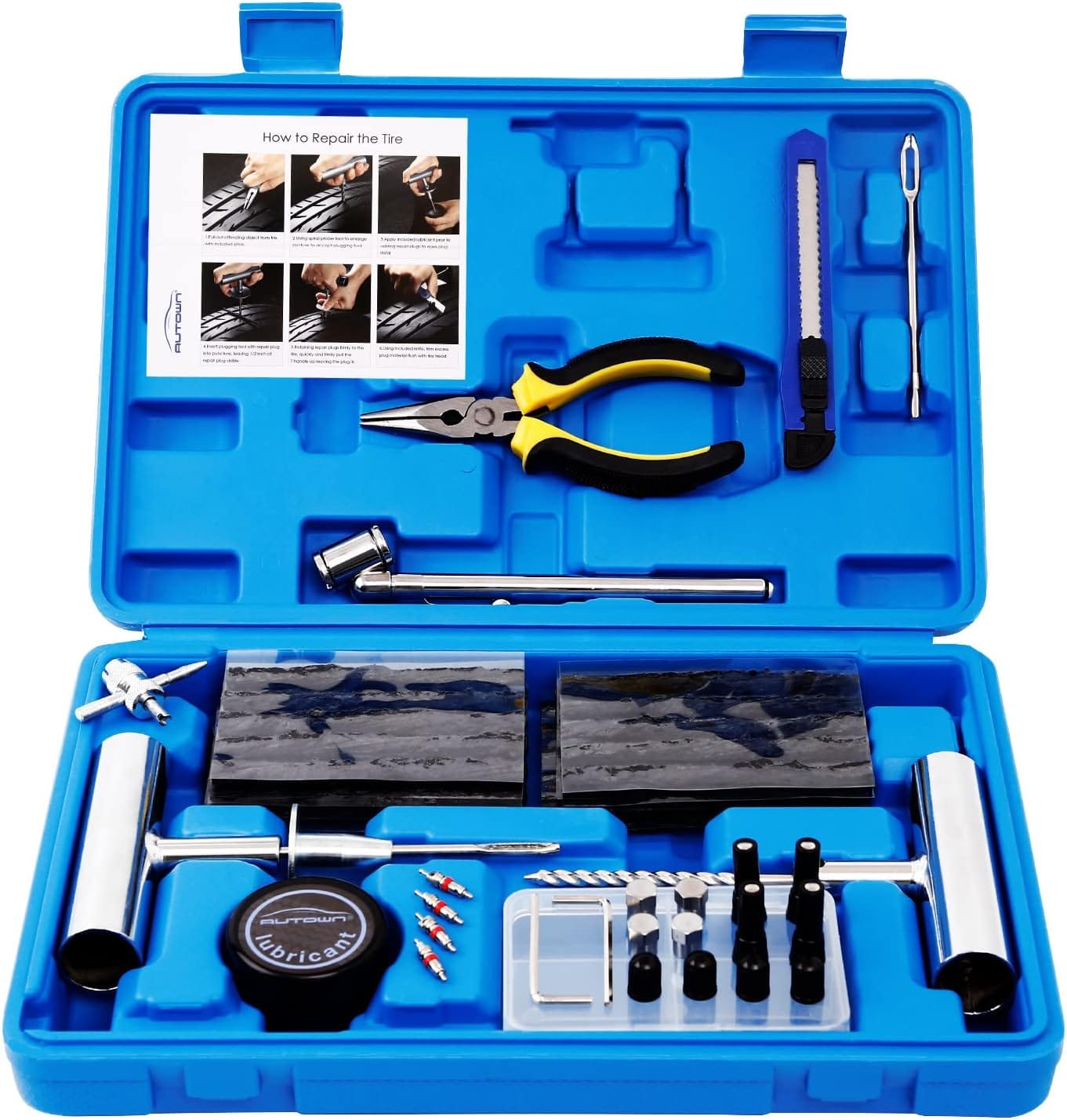
| AUTOWN 68 piece plug kit | Full plug kit with tools | The serious go-to, spare tire gone | $21.99 |
| AUTOWN 20 piece plug kit | Compact plug kit | Glovebox or bin footprint | $9.99 |
| Slime 16 oz sealant | Liquid tire sealant | Slow leaks and small punctures | $10.98 |
| Fix-A-Flat aerosol | Spray sealant plus inflator | One-and-done emergency | $8.49 |
Two plug kits cover the "I want to fix this properly and keep driving" end. Slime covers slow leaks and the punctures small enough to seal while you drive. Fix-A-Flat is the thing that gets you moving on the spot, right or wrong. Pick by how far you are from help and what you will tolerate doing to the tire later.
AUTOWN 68 piece plug kit, the one you actually use
This is the kit to put in the truck if you plan on more than one trip a year. It is the full set: a dozen or so rubber plugs in a couple of sizes, an auger, a tapered insertion tool, a reamer or rasp to clean the hole, and a small blade for the rubber to cut plugs down to size. The 68 piece count sounds like junk quantity, but most of it is spare plugs and the small tools, and that is exactly what you want out in the dirt where one tool always goes missing.
Here is the real workflow, because it is not in the box. You jack the truck up and put it on a stand, which is where the off-road jack guide matters, since a flimsy bottle jack under a loaded 4x4 is how people get hurt. Pull the nail or bolt, run the reamer through the hole, thread a stringer through one plug, and pull it in with the insertion tool until the tail sticks out. Cut the flush side. Re-inflate and check for spray. The whole job on a rear tire is under twenty minutes once you have done it twice.
Plug it properly and the tire holds air for years, not hours. That is the whole reason to own this kit over a spray can. The catch is that it takes a flat tire, a jack, and the patience to do it right, and it is not the move to make on a highway at night with traffic coming. For that one you want the aerosol, which is its own section below.
AUTOWN 20 piece plug kit, the footprint version
Same company, same basic plug-and-auger method, but the hardware trimmed down and the plug count cut to fit a smaller space. The 20 piece suits a truck bed bin, with the 68 piece kept at home. It still has the auger, the insertion tool, and enough plugs for a real repair, just not a drawer full of them.
The tradeoff is that the smaller kit has less slack. If your hole is a bit out of the center of the tread, you still need a couple of plugs to size it down, and a lean kit means you are counting pieces instead of grabbing one. If you run the 20 piece, learn the process at home on a spare so you do not figure it out at a campfire. The 68 piece is far more forgiving of a first attempt, and that forgiveness makes it the better pick for long hauls.
Either AUTOWN kit is the correct answer to the question "my spare is gone and I have a nail in the tread." They do not fix a sidewall tear, a slow blowout, or a tire that has already come off the rim, so do not buy one expecting it to be a miracle. It fixes a puncture. That is a lot, but it is not everything.
Slime 16 oz sealant, the slow leak fix
This is a different job entirely. Slime is a liquid you pour into the tire through the valve, and it coats the inside. When there is a small puncture or a slow leak at the bead, the liquid seals the channel and holds pressure. It is the right tool when the tire is losing air over days and weeks, not when it is flat on the ground in front of you.
Where it really earns its keep is the slow leak. You top off pressure every few days and cannot find the nail, or the valve stem seeps, or there is a hairline bead leak. A dose of Slime stops the bleeding without a plug and without a jack. It will also handle a small puncture and get you moving, because the formula hardens the hole from the inside. The 16 oz bottle handles a standard passenger or mild 4x4 tire, and the formula is marked non-toxic, which is nicer than the older solvents when you are working in a tight bed.
The limit is speed and size. Slime will not save a tire that is already flat and dry. It needs the tire to be at least partly sealed so the liquid can reach the hole and build up, and big punctures let it drain out before it sets. So keep your expectations where they belong: Slime for the slow leaks and the small ones you want to fix without tools, plug kits for the real holes.
Fix-A-Flat aerosol, the get moving now
The spray can is the answer when the tire is flat and you need to be somewhere. One 16 oz can of sealant plus compressed air, attached to the valve, and the can pumps sealant into the tire while it reinflates. On a small puncture the liquid plugs the hole from the inside and you drive out. That is the whole pitch, and it is the reason this can lives in the glovebox of most factory trucks.
Catch it by the valve and you keep your hands clean, which matters when the tire is on a rock and your knuckles already are. The quirk to know is that the aerosol seals a hole by caking sealant on the inside as the tire rotates, so you need the puncture to be in the tread and the hole to be small enough for the material to grab. A big gash or a sidewall cut is not the case, and driving on a tire that is half full of a can of gel is a temporary measure, not a repair.
The honest note: after a Fix-A-Flat job, the sealant dries and can clog a wheel or a pressure sensor on the next fill, so the can has a disclaimer about cleaning it up. If this is your daily driver with a TPMS, put a plug kit in as the follow-up plan. Use the can to get to the shop, then do it right with rubber.
Buying it right
Decide what your spare situation is before you spend a dollar. If you run a full-size spare, a repair kit is a backup to a backup and the compact 20 piece covers it. If you run a spare-less setup or a space saver, the kit is the only thing between you and a tow, and that is the case for the 68 piece and the discipline to practice it.
Then think about how you will actually have to do it. Every method above needs the tire off the ground or at least access to the valve, and none of them work well if the truck is sitting on a slope with a wobbly jack. Pair the kit with the off-road jack and a stand you trust. The tire inflator guide covers the compressor that reinflates after, because you will want air back to a full pressure and a 12 volt compressor beats a can of gel every time for the refill.
If you get stuck often enough to be reading this, the kit is the last link in a chain that starts with the recovery boards and the recovery kit. Those get you out of the mud, but a puncture is what leaves you there. So the repair stash is the piece most people forget until the nail does it. Keep it in the truck, not the garage, and you will never be the one calling for the tow.
Get tire repair kits for less
These are cheap parts and the prices bounce on restock anyway. We track them, and the deals page for tire care gear is the place to check before you pay list, especially if you are grabbing the 68 piece and an inflator at the same time.
Related guides
- Off-road recovery guide: the full cluster in one place
- Tire inflators
- Jump starters
- Tire deflators
Get the gear that holds up
New field tests, guides and real deals, about once a week. No spam, unsubscribe anytime.