Affiliate disclosure: RigTested is an Amazon Associate and may earn from qualifying purchases through links on this page, at no extra cost to you.
Gear we actually run — not gear we Googled
We are careful on this site about the difference between gear we have physically lived with and gear we have researched. Most buying guides — ours included — lean on specs, expert teardowns, and owner feedback to sort the good from the junk. This page is different. Everything below is gear we bought with our own money, bolted into the rig, and have used on real trips. No loaner units, no spec-sheet guesses.
These are the two pieces that, honestly, we would not leave the driveway without anymore: a power setup that makes the truck genuinely self-sufficient, and a sleep setup that fixed the one thing that always ruined mornings. If you only upgrade two things this season, we would point you here.
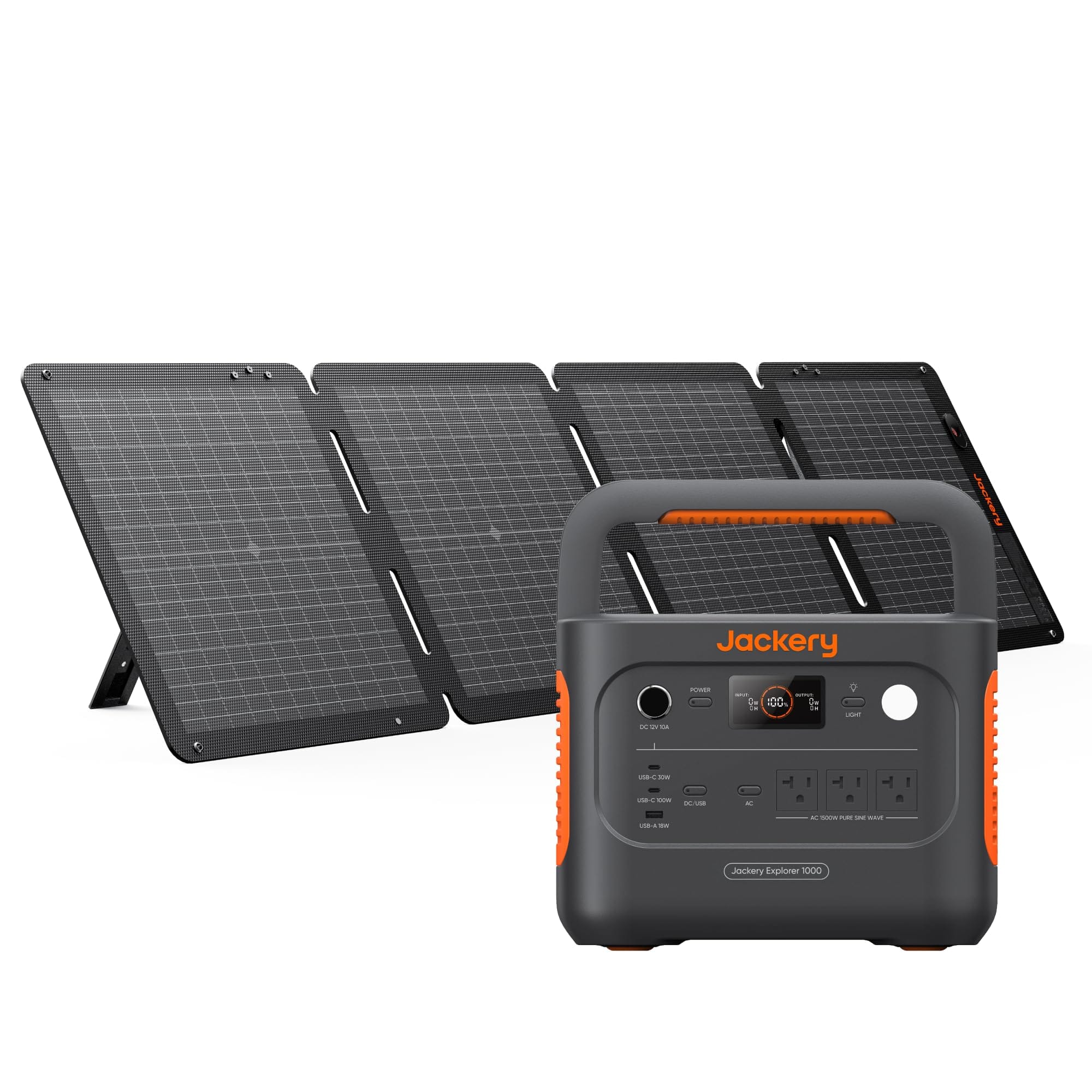
Jackery Solar Generator 1000 v2 (1070Wh, 1500W) + 100W Solar Pan
$669.00
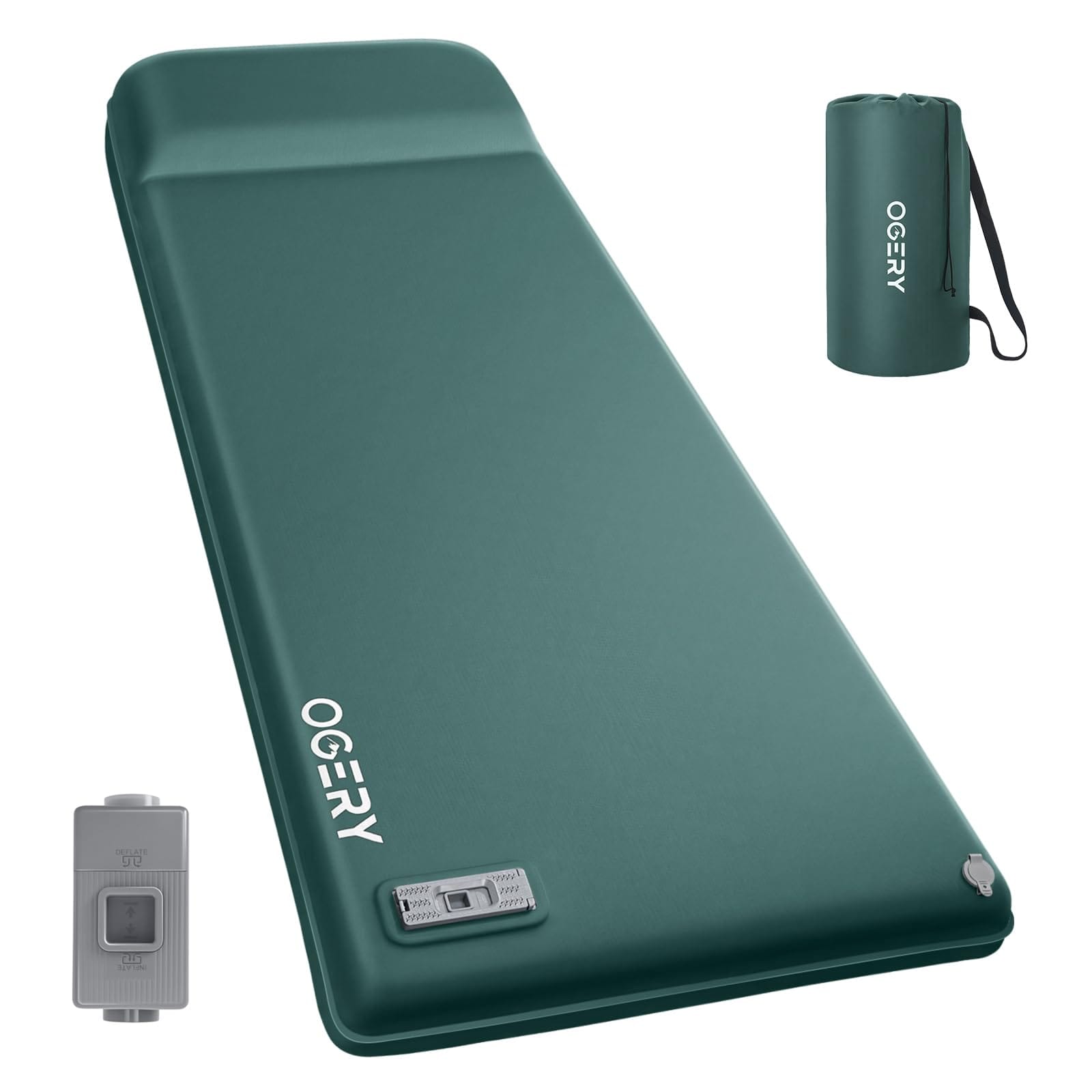
OGERY Self-Inflating Sleeping Pad, 3.15" Memory Foam, Built-in P
$62.99
1. Jackery Solar Generator 1000 v2 — the rig's power backbone
The Jackery Solar Generator 1000 v2 is the bundle we run: the Explorer 1000 v2 power station paired with a 100W SolarSaga panel. On paper it is 1,070Wh of LiFePO4 capacity and 1,500W of continuous AC output (with a higher surge for start-up loads). In plain terms: enough to run a 12V fridge for a couple of days, keep phones, drones, laptops, and camp lights topped off, and still have margin left.
Three things earn it the permanent spot for us:
- LiFePO4 chemistry. It is the battery type worth holding out for — thousands of charge cycles, better behavior in heat, and a flat, predictable discharge. For something you are trusting in the backcountry, the longevity and thermal margin matter more than shaving off a few pounds.
- Genuinely fast wall charging. Jackery rates this generation for a roughly one-hour full recharge off AC. That is the feature that changes how you use it — top it up over a campground breakfast instead of babysitting it for four hours.
- The solar panel is actually included. A lot of "solar generator" listings are the battery only. This bundle ships with the 100W panel, so you can trickle it back up off-grid without a separate purchase.
Our real-world test: in Idaho we ran a Starlink (V1) off it for 72 hours straight, entirely on solar. Through the day the panels kept the battery topped off and powered Starlink at the same time; overnight it drew the battery down to around 50%, then fully recharged the next morning once the sun came up. That is the honest test of an off-grid power setup — a continuous load that never gets unplugged — and it held indefinitely.
The one thing to know before you buy panels: the 1000 v2 has two solar input ports rated 200W each, for 400W total. You cannot buy a single 400W panel and plug it straight in — you need two panels (up to 200W apiece) feeding both ports to actually hit that 400W ceiling. Plan your solar around that, not around one big panel.
Honest caveats: the bundle ships with a single 100W panel, which is a fine starting point for stretching runtime — but to run loads off solar the way we did, plan on building up toward that 400W (2×200W) ceiling. And at ~1,070Wh, this is the right-sized "one truck, a few days" unit — not a run-the-whole-basecamp-with-power-tools rig. For most overlanders, that is exactly the sweet spot.
Check the Jackery 1000 v2 bundle on Amazon
2. OGERY Self-Inflating Sleeping Pad — the fix nobody warns you about
You can spend a fortune on the truck and still sleep terribly, and a bad pad wrecks the next day's driving. The OGERY self-inflating pad is the piece that quietly fixed that for us. It is a 3.15-inch memory-foam pad with a built-in electric pump and an integrated pillow, rated for four-season use.
Why it beat the pads it replaced:
- Real thickness. 3.15 inches of memory foam is enough loft to keep a side-sleeper's hip and shoulder off the hard stuff — the failure point of most thin backpacking pads for car and truck camping.
- Built-in pump. No lung-busting, no separate pump sack to lose. You press a button, it fills, you fine-tune the firmness. On a cold night when you just want to be in the bag, that convenience is worth more than it sounds.
- Integrated pillow. One less item to pack, forget, or inflate separately.
Our real-world use: we have run ours about six times now — in the bed of the Raptor, straight on the ground, and inside a trailer. It is not the 6–8 inches of a full queen air mattress, but that is the wrong comparison. It sets itself up in about a minute, packs back down, and it is comfortable enough that we actually sleep. For the convenience-to-comfort ratio, it beats hauling a big air mattress and a separate pump every time.
Honest caveats: it is a car-camping / truck-bed / rooftop-tent pad, not an ultralight backpacking pad — the comfort comes from bulk and weight you would not want to carry miles on your back. For overlanding, where the truck carries the load, that trade is exactly right.
Why these two, together
Power and sleep are the two systems that decide whether a trip feels like an adventure or a chore. Get them right and everything else — cooking, navigation, comfort — gets easier. The Jackery keeps the electronics and the fridge alive without a noisy gas generator; the OGERY means you actually wake up rested enough to enjoy it. Neither is the most expensive option in its category, and that is the point: they are the ones that earned their keep.
Quick specs
| Gear | Key numbers | Best for | Price |
|---|---|---|---|
| Jackery 1000 v2 + 100W panel | 1,070Wh · 1,500W AC · LiFePO4 · ~1hr AC recharge | Fridge, electronics, off-grid power for a few days | ~$669 |
| OGERY self-inflating pad | 3.15" memory foam · built-in pump · built-in pillow · 4-season | Truck-bed / rooftop-tent / car-camping sleep | ~$63 |
For fridge options to pair with a station like this, see our 12V fridge guide.
FAQ
Is the Jackery 1000 v2 enough to run a 12V fridge overnight?
Yes, comfortably. A typical 12V compressor fridge averages roughly 50–70W, so 1,070Wh gives you well over a full day — often a couple of days — of fridge runtime, with capacity to spare for phones and lights. Exact runtime depends on ambient heat and how full the fridge is.
Does the included 100W panel fully recharge it in a day?
Not on its own. A single 100W panel is best thought of as a way to stretch and top up capacity over multiple sunny days, not a same-day full refill. Wall charging is the fast path; solar is the off-grid supplement. Add more panel wattage if you intend to live off solar.
Is the OGERY pad okay for backpacking?
It is built for car camping, truck beds, and rooftop tents, where the vehicle carries the weight. It is thicker and heavier than an ultralight backpacking pad — that bulk is exactly what makes it comfortable — so we would not carry it far on foot.
Bottom line
If you want the two upgrades that make the biggest day-to-day difference in an overland setup, this is where we would start: the Jackery Solar Generator 1000 v2 for power you can trust, and the OGERY pad for sleep you will actually get. Both are in our rig right now, and both stay.
This guide was drafted with AI assistance and reviewed by our team. The gear covered here was purchased and used by us; other RigTested guides clearly note when picks are researched rather than hands-on tested.
🔥 Live deals, updated daily
Prices on the gear we test move constantly. We track current discounts on overlanding must-haves: jackery 1000 v2 + ogery pad and the rest of our tested kit and refresh them every morning.
See today’s live deals →Related guides
- Overland power guide: the full cluster in one place
- Starlink for remote work
- Portable power stations
- Portable solar panels
Get the gear that holds up
New guides, hands-on reviews as they land, and real deals, about once a week. No spam, unsubscribe anytime.